Thursday, 17 September 2015

COMMENT: Exaltation of the Holy Cross, the Johannine perspective

17 September - Exaltation of the Holy Cross, the Johannine perspective  
COMMENT:

Monday, 14 September 2015


Feast of the Exaltation of the Holy Cross 14 September 2015.  


The Instrument of Our Salvation  
http://catholicism.about.com/od/holydaysandholidays/p/Exaltation-Of-The-Holy-Cross.htm   
The Feast of the Exaltation of the Holy Cross (September 14) celebrates the instrument of our salvation.
 Learn more about this ancient feast....
The Blog of the 14 September had the Info from Catholic Culture.  We already had the Gospel of the Feastday,   
The Gospel of John 3:13-17.
This leeds us into the Johannine perspective of the Exaltation of the Cross.
Below, I have emphasized the terms from the Reading of John's Gospel:   
to lift up
lifted up in crucifixion
exalted
earthly
heavenly
the world
overcome the light
the darkness
sending
eternal life
crucified one
Lamb of God
. . . . .: 
Cf. Life Abounding by Brendan Byrne,
      also Notes of Fr. Peter  Edmonds SJ.

Jesus' Conversation with Nicodemus: 3: 1-21 67

of the agent of rebirth is wrapped in the mystery of God-God who is reaching out in the mission of Jesus to bestow upon human beings the filial status that has been from eternity the prerogative of the Son (1: 18; cf. 20: 17).
Jesus' parable does not help Nicodemus at all. He remains on the purely literal level ("flesh"), asking simply, "How can this be?" (v. 9). A final, somewhat sarcastic exclamation on Jesus' part ("You, a teacher of Israel, do not know these things!" [v. 10]) brings the dialogue to an end. It also leads into the following discourse in the sense that the difficulty a learned Israelite such as Nicodemus has experienced illustrates the difficulty Jesus and the subsequent community of believers-have in communicating to the wider Jewish audience ("you") what they have experienced (vv. 11-12). So far the conversation has been about "earthly things" (ta epigeia). If such testimony has not resulted in belief, how much more difficult it will be when Jesus-or the Johannine community speaking through him-bears witness to what he has experienced of the "heavenly" (ta ourania). "Earthly things" would seem to refer to the physical realities to which Jesus has pointed­birth and the wind-as images of the divine operation ("birth from above"). If Nicodemus has failed to see through the images to the divine realities to which they point, how will it be when Jesus goes on to speak, as he now proceeds to do, of "heavenly" realities (the descent and ascent of the Son of Man) simply in themselves?"

No One Has Gone Up to Heaven: 3:13-15

The discourse moves very swiftly from one motif to another. We may be surprised by the opening denial that "no one has gone up to heaven save one who has come down from heaven, the Son of Man" (v. 13), followed by a reference to a saving, "lifting up," of the same Son of Man on the pattern of Moses' "lifting up" of the serpent in the wilderness (vv. 14-15). We are eavesdropping here on a long-standing conversation-more accurately, a dispute-between the Johannine community and contemporary Jewish lead­ers concerning the relative status of Jesus and Moses. In the Jewish tradition if any figure had access to the "heavenly world" it was Moses. His ascent of Mount Sinai to commune with God and receive the Torah (Exod 19:3-15; 24: 12-18; 33:18-34:35; Deut 34:10) equipped him to be the supreme revealer of the "heavenly." Renewing a polemic already hinted at in the Prologue (1: 17), the discourse challenges this tradition (v. 13a), insisting that "no one"-neither Moses nor any other notable figure of Israel's past-has

68 Jesus Reveals His Glory to the World (Israel): 1 :19-12:50

ascended to the heavenly realm. But there is One who has descended from there (v. 13b) and who has truly ascended back there to the heavenly realm from which he came (1: 1-2, 18):43 namely, Jesus, once again denoted in his role as "Son of Man" (cf. 1:51).44 As such, he alone-and the community that preserves his witness-is qualified to speak of the heavenly realm and the benefits that flow to human beings as a consequence of his descent therefrom.

Moses does indeed have a role, albeit one subservient to that of Jesus (vv. 14-15). According to Numbers 21:4-9, when Israel grumbled against God in the wilderness, the Lord sent serpents among the people, their poisonous bite causing many deaths. When Moses prayed for relief from this affliction, he was told to erect a bronze image of the poisonous serpent on a pole. When anyone was bitten, they looked at the bronze effigy and lived (21:9). The gospel sees this curious biblical incident as a type or anticipatory sign of the saving revelation later to come about through Jesus. It does so by once again exploiting verbal ambiguity. The Greek verb hypsoun can mean "to lift up" in a physical sense but also more generally "to exalt."45 As such it enables the gospel to hold together Jesus' physical lifting up in crucifixion with his exaltation and return to the Father in glory. Moses' "lifting up" of the serpent in the wilderness foreshadows the "lifting up" of Jesus upon the cross (v. 14; cf. later 8:28; 12:34). The life-restoring effect of looking upon the bronze serpent anticipates and points to the gift of (eternal) life that flows from looking upon the Crucified with the eyes of faith and finding there, not simply crucifixion, but the supreme revelation of God (v. 15). While the death of Jesus will take place on earth and in this sense belong to the "earthly" sphere alluded to above, what it reveals to believers is "heavenly" par excellence: the truth that God is love, a love that the mission of the Son, culminating in his self-sacrificial death upon, makes manifest on earth (cf. 1:18).


Jesus' Conversation with Nicodemus: 3:1-21 69

 "God So Loved the World": 3:16-21
The mission of the Son as an expression of God's love comes to the fore in what is justly one of the most celebrated sentences of the Fourth Gospel:

For God so loved the world that he gave his only begotten Son, so that everyone who believes in him may not perish but may have eternal life. (3: 16)

The radicality of this assertion is striking when we consider the negative rating that normally attaches to "world" in the Fourth Gospel. Even here "the world" is not a neutral term. Before the divine mission the world belongs to the darkness that has sought and failed to "overcome" the light (1 :5).46 It is this world that is the object of the divine love and it is to rescue it from the darkness that God, in a supreme exercise of love, has sent the Son into the world to be its Light." What God's "giving" of the Son adds to "sending" is the hint that the sending will end in death, death upon the cross. The incarnation described in the Prologue is to play itself out in redemption: the rescue of human beings from death so that they may have a share in the divine "eternal life."

Faith, then, is akin to the life-restoring "gaze" of the Israelites bitten by the serpents upon the image of the very thing that was afflicting them. Believers "gaze" at the Crucified One, compelled to confront the human evil, including their own evil, that has put him there. "They look upon the One they have pierced" (19:37; cf. Zech 12: 10), who is at that very moment the Lamb of God who takes away the world's sin (1 :29; cf. 1 :36). Confronting at one and the same time their own evil and the supremely costly divine gift that takes it away, they come to know God revealed as Love, reaching out to draw them into the sphere of undying divine life.

The following verses (vv. 17-21) make clear that this vision of faith subverts any sense that the primary movement of the divine toward the (sinful) world is one of condemnation. The Son has not been sent to condemn the world but to bring it salvation (v. 17). There is judgment and condemnation," but this is a function and an outcome transferred to human

1.               


70 Jesus Reveals His Glory to the World (Israel): 1:19-12:50

beings, wholly dependent upon the attitude they choose to take toward the divine outreach to them in the person of the Son.  Those who respond with faith to the saving revelation of the cross are not judged by God; they have confronted their own sinfulness and had their sin "taken away" by the Lamb (v. 18a). Those, on the other hand, who have failed to respond in faith have condemned themselves through their failure to believe "in the name of the only-begotten Son of God." That is, they fail to acknowledge that in his person God is reaching out to them in their sin, seeking to remove it and draw them to eternal life (v. 18b).

In conclusion (vv. 19-21) Jesus reflects upon this divided outcome in respect to judgment, reverting to the "light"/"darkness" dualism characteristic of the gospel." In his person "the Light" has come into the world (cf. 1:4-5, 9). The coming of the Light brings judgment because human beings do not come to the light but prefer to remain in the darkness for fear that their evil deeds should be exposed (vv. 19-20). This means that, rather than having their sins removed by the Lamb (1 :29), they remain in the darkness and so bring down upon themselves judgment in the sense of condemnation. Those, however, who "do the truth" in the sense of being loyal to God and of living openly and without deceit in the divine presence are not afraid to come to the Light. The Light may have exposed their sinfulness but it also "takes it away." Living henceforth in the Light means living in such a way that adherence and loyalty to God are manifest in their entire pattern of life (v. 21).

Reflection. Emerging from the discourse is a kind of discernment of spirits that flows from what is involved in the act of faith. The Israelites had to look at the image of the evil afflicting them and confront it in order to be saved from its death-dealing bite. Likewise, faith involves confronting one's own evil as exposed by the Cross, bringing it in this sense out into the light. While the sequence as a whole confronts the radicality of the conversion required in initially coming to faith, conversion is not for most people a once-off affair. As believers we are summoned to a continuing conversion, a continual coming out of the pockets of darkness that remain in our lives, the areas of deceit and self-delusion that we erect as barriers to the light and prevent us living fully in the truth that would set us free (8:32). If Jesus' discourse in the present passage summons us to continual "judgment" in this sense, it does so only in the context of a sublime assertion of God's love (3: 16).52


John the Baptist's Last Witness: 3:22-36

Considering Nicodemus in the preceding half of chapter 3, we noted that he is a representative figure standing in for Jews who, while sympathetic to Jesus, are unwilling to take the radical step toward full faith and commiment. In the remainder of John 3, we have something similar to this in that we hear a conversation between John the Baptist and his disciples in which John completes his witness to Jesus by pointing out to them the superiority of Jesus and the necessity for his own role to fade away. In allowing us to "overhear" that conversation the gospel is in all likelihood addressing dis­ciples of John who continued their allegiance to his memory in their own time. The community behind the gospel is appealing to this further group within Judaism to hearken to their master's witness and make, as he indicated, the transition to the figure whose messianic status and superiority it was his role to point out. In other words, in both sections of John 3, we hear in sequence the gospel making an appeal to two groups continuing within the Judaism of its day to come to full faith and commitment to Jesus." This direction of thought will continue in the immediately following chapter where Jesus will be in conversation with an even more marginal group in Judaism (the Samaritans) in the person of the Samaritan woman.
This means that as contemporary readers of the gospel we have to face the fact that considerable sections of the text represent places where the Johannine community is sorting out its relationship to representative sectors
 __________________________________________________

Tuesday, 15 September 2015

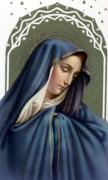
Seven Sorrows of Our Lady 13 September2015

Seven Sorrows of Our Lady 13 September2015

Seven Sorrows Polyptych

From Wikipedia, the free encyclopedia
Jump to: navigationsearch
Seven Sorrows Polyptych
Durer, polittico dei sette dolori, ricostruzione.jpg
ArtistAlbrecht Dürer
Yearc. 1500
TypeOil on panel
Dimensions189 cm × 138 cm (74 in × 54 in)
LocationAlte PinakothekMunich, andGemäldegalerie Alte MeisterDresden.
The Seven Sorrows Polyptych is an oil on panel painting byAlbrecht Dürer. The painting includes a central picture (108 x 43 cm), currently at the Alte Pinakothek in Munich, and seven surrounding panels (measuring some 60 x 46 cm) which are exhibited at the Gemäldegalerie Alte Meister of Dresden.

Description[edit]

The work was commissioned by Frederick III, Elector of Saxony, not a long time after his meeting with Dürer atNuremberg in April 1496. Stylistic considerations suggest that the artist started to work on the painting only from around 1500.
Modern scholars tend to attribute to Dürer only the central panel, the others having been executed by his pupils based on his drawings. The central panel, portraying the Sorrowing Mother, arrived in the Bavarian museum from theBenediktbeuren convent of Munich in the early 19th century. It was restored in the 1930s: once the overpaintings and additions were removed, the shell-shaped niche (a motif typical of Italian art), the halo and the sword (a symbol of Mary of the Seven Sorrows) on the right were rediscovered, clarifying the subject of the work.
The other panels were at Wittenberg, seat of Frederick's castle. In 1640 they were moved to the Kunstkammer of the Prince of Saxony. In the mid-20th century they were restored: their conditions improved, but the attribution was not cleared.
#ImageSubject#ImageSubject
1Albrecht Dürer 018.jpgCircumcision of Jesus5Albrecht Dürer 023.jpgChrist Nailed at the Cross
2Albrecht Dürer 022.jpgFlight to Egypt6Albrecht Dürer 019.jpgCrucifixion
3Albrecht Dürer 020.jpgChrist among the Doctors7Albrecht Dürer 021.jpgDeposition
4Albrecht Dürer 024.jpg


Via Crucis  


Seven Dolours (Sorrows) of Mary
This is a devotion instituted in the course of the thirteenth century, in honor of the sorrows of the Blessed Virgin Mary, endured by her in compassion for the suffering and death of her Divine Son.


   1. Prophecy of Simeon - reflect on and sympathize in the sorrow of our Blessed Lady, when she presented her Divine Child in the Temple, and heard from the aged Simeon that a sword of grief should pierce her soul on His account.
Our Father, Seven Hail Mary's

   
2. Flight into Egypt - reflect on her sorrow when, to escape the cruelty of King Herod, she was forced to fly into Egypt with St. Joseph and her beloved Child.
Our Father, Seven Hail Mary's


 3. Three-day Separation from Jesus in Jerusalem - reflect on her grief, when, in returning from Jerusalem she perceived that she had lost her dear Jesus, whom she sought sorrowing during three days.
Our Father, Seven Hail Mary's


   4. Meeting Christ on the Road to Calvary - reflect on her meeting her Divine Son, all bruised and mangled, carrying His cross to Calvary, and seeing Him fall under His heavy weight.

Our Father, Seven Hail Mary's


   5. Crucifixion and Death of Jesus Christ - reflect on her standing by when her Divine Son was lifted up on the cross, and the blood flowed in streams from His sacred wounds.
Our Father, Seven Hail Mary's


 6. Our Lord is Taken Down from the Cross (Pieta) - reflect on her sorrow, when her Divine Son was taken down from the cross, and she received Him into her arms.
Our Father, Seven Hail Mary's


    7. Our Lord and Savior Jesus Christ is Buried in the Tomb - contemplate her following His sacred body, as it was borne by Joseph of Arimathea, and Nicodemus, to the sepulchre, enclosed there, and hidden from her sight.
Our Father, Seven Hail Mary's


3 Hail Mary's in honor of the Sorrowful tears of Our Lady
V. Pray for us, O most Sorrowful Virgin
R. That we may be made worthy of the promises of Christ
Let us pray:

Lord Jesus, we now implore, both for the present and for the hour of our death, the intercession of the most Blessed Virgin Mary, Thy Mother, whose holy soul was pierced at the time of Thy Passion by a sword of grief. Grant us this favor, O Saviour of the world, Who livest and reignest with the Father and the Holy Ghost for ever and ever. Amen.
+ + + 
References of the New Testament:

The First Sorrow of Mary: The Prophecy of Simeon at the Presentation in the Temple (Lk 2:22-35)

 The Second Sorrow of Mary: The Flight into Egypt (Mt 2:13-21)

The Third Sorrow of Mary: The Loss of Jesus in the Temple (Lk 2:41-50)

The Fourth Sorrow of Mary: Mary Encounters Jesus on the Way of the Cross (John 19:1; Luke 23:26-32)

The Fifth Sorrow of Mary: Jesus Dies on the Cross (Mark 15:22; John 19:18, 25-27; Mark 15:34; Luke 23:46)

The Sixth Sorrow of Mary: Jesus Is Taken Down From the Cross (John 19:31-34, 38; Lam 1:12)

The Seventh Sorrow of Mary: Jesus is Laid in the Tomb (Matthew 27:59; John 19:38-42; Mark 15:46; Luke 27:55-56)


Return to main page
This page is the work of the Servants of the Pierced Hearts of Jesus and Mary


Our Lady of Sorrows


Our Lady of Sorrows
The memory of the Virgin of Sorrows calls us to relive the decisive moment of the history of salvation and to venerate the Mother associated with her ​​Son's Passion and close to him lifted up on the cross. Her motherhood takes on Calvary universal dimensions. This source memory devotional was introduced in the Roman calendar by Pope Pius VII (1814). (Mess. Rom.)
Etymology: Mary = loved by God, from the Egyptian; lady, Hebrew
Martyrology: Memory of the Blessed Virgin Mary of Sorrows, which, at the foot of the cross of Jesus, was intimately associated and faithfully to the saving Passion of the Son and introduced himself as the new Eve, because, as the disobedience of the first woman led to the death, his admirable obedience leads to life. 

iBreviary

Office of Readings

SECOND READING

From a sermon by Saint Bernard, abbot
(Sermo in dom. infra oct. Assumptionis, 14-15: Opera omnia, Edit. Cisterc. [1968], 273-274

His mother stood by the cross


The martyrdom of the Virgin is set forth both in the prophecy of Simeon and in the actual story of our Lord’s passion. The holy old man said of the infant Jesus: He has been established as a sign which will be contradicted. He went on to say to Mary: And your own heart will be pierced by a sword.

Truly, O blessed Mother, a sword has pierced your heart. For only by passing through your heart could the sword enter the flesh of your Son. Indeed, after your Jesus—who belongs to everyone, but is especially yours—gave up his life, the cruel spear, which was not withheld from his lifeless body, tore open his side. Clearly it did not touch his soul and could not harm him, but it did pierce your heart. For surely his soul was no longer there, but yours could not be torn away. Thus the violence of sorrow has cut through your heart, and we rightly call you more than martyr, since the effect of compassion in you has gone beyond the endurance of physical suffering.

Or were those words, Woman, behold your Son, not more than a word to you, truly piercing your heart, cutting through to the division between soul and spirit? What an exchange! John is given to you in place of Jesus, the servant in place of the Lord, the disciple in place of the master; the son of Zebedee replaces the Son of God, a mere man replaces God himself. How could these words not pierce your most loving heart, when the mere remembrance of them breaks ours, hearts of iron and stone though they are!

Do not be surprised, brothers, that Mary is said to be a martyr in spirit. Let him be surprised who does not remember the words of Paul, that one of the greatest crimes of the Gentiles was that they were without love. That was far from the heart of Mary; let it be far from her servants.

Perhaps someone will say: “Had she not known before that he would not die?” Undoubtedly. “Did she not expect him to rise again at once?” Surely. “And still she grieved over her crucified Son?” Intensely. Who are you and what is the source of your wisdom that you are more surprised at the compassion of Mary than at the passion of Mary’s Son? For if he could die in body, could she not die with him in spirit? He died in body through a love greater than anyone had known. She died in spirit through a love unlike any other since his.

RESPONSORY

When they came to a place called Calvary,
they crucified Jesus there.
 His mother stood beside the cross.

A sword of sorrows pierced her blameless heart.
 His mother stood beside the cross.

CONCLUDING PRAYER

Let us pray.

Father,
as your Son was raised on the cross,
his mother Mary stood by him, sharing his sufferings.
May your Church be united with Christ
in his suffering and death
and so come to share in his rising to new life,
where he lives and reigns with you and the Holy Spirit,
one God, for ever and ever.
 Amen.

Or:

O God, who willed
that, when your Son was lifted high on the Cross,
his Mother should stand close by and share his suffering,
grant that your Church,
participating with the Virgin Mary in the Passion of Christ,
may merit a share in his Resurrection.
Who lives and reigns with you in the unity of the Holy Spirit,
one God, for ever and ever.
 Amen.

Monday, 14 September 2015

Pilgrimage Haddington to Nunraw 13 September 2015


This may prove the witness of the great Youth Pilgrabe led by Archbishop.Leo-----


Some of the brave walkers.

Memory 1952 - first walk Nunraw.
Gratefully I was given a lift on to Garvald, and finding way to the archway and on through avenue....

Feast of the Exaltation of the Holy Cross 14 September 2015


The Feast of the Exaltation of the Holy Cross

The Instrument of Our Salvation
  http://catholicism.about.com/od/holydaysandholidays/p/Exaltation-Of-The-Holy-Cross.htm   
With acknowledgement - appreciated.


The Feast of the Exaltation of the Holy Cross (September 14) celebrates the instrument of our salvation. Learn more about this ancient feast.
The Discovery of the True Cross - Leemage/UIG/Getty Images
The Discovery of the True Cross, by Italian painter Agnolo Gaddi c.1350-96. Fresco, c.1385. Basilica di Santa Croce, Florence, Italy.  Leemage/UIG/Getty Images.

The Feast of the Exaltation of the Holy Cross celebrates three historical events: the finding of the True Cross bySaint Helena, the mother of the emperor Constantine; the dedication of churches built by Constantine on the site of theHoly Sepulchre and Mount Calvary; and the restoration of the True Cross to Jerusalem by the emperor Heraclius II. But in a deeper sense, the feast also celebrates the Holy Cross as the instrument of our Salvation.
This instrument of torture, designed to degrade the worst of criminals, became the life-giving tree that reversed Adam's Original Sin when he ate from the Tree of the Knowledge of Good and Evil in the Garden of Eden.

Quick Facts

  • Date: September 14
  • Type of Feast: Feast
  • Readings: Numbers 21:4b-9; Psalm 78:1bc-2, 34-35, 36-87, 38; Philippians 2:6-11; John 3:13-17 (full text here)
  • Prayers: The Sign of the Cross
  • Other Names for the Feast: Triumph of the Cross, Elevation of the Cross, Roodmas, Holy Cross

History of the Feast of the Exaltation of the Holy Cross

After the death and resurrection of Christ, both the Jewish and Roman authorities in Jerusalem made efforts to obscure the Holy Sepulchre, Christ's tomb in the garden near the site of His crucifixion. The earth had been mounded up over the site, and pagan temples had been built on top of it. The Cross on which Christ had died had been hidden (tradition said) by the Jewish authorities somewhere in the vicinity.
According to tradition, first mentioned by Saint Cyril of Jerusalem in 348, Saint Helena, nearing the end of her life, decided under divine inspiration to travel to Jerusalem in 326 to excavate the Holy Sepulchre and attempt to locate the True Cross.

A Jew by the name of Judas, aware of the tradition concerning the hiding of the Cross, led those excavating the Holy Sepulchre to the spot in which it was hidden.
Three crosses were found on the spot. According to one tradition, the inscriptionIesus Nazarenus Rex Iudaeorum ("Jesus of Nazareth, King of the Jews") remained attached to the True Cross. According to a more common tradition, however, the inscription was missing, and Saint Helena and Saint Macarius, the bishop of Jerusalem, assuming that one was the True Cross and the other two belonged to the thieves crucified alongside Christ, devised an experiment to determine which was the True Cross.
In one version of the latter tradition, the three crosses were taken to a woman who was near death; when she touched the True Cross, she was healed. In another, the body of a dead man was brought to the place where the three crosses were found, and laid upon each cross. The True Cross restored the dead man to life.
In celebration of the discovery of the Holy Cross, Constantine ordered the construction of churches at the site of the Holy Sepulchre and on Mount Calvary. Those churches were dedicated on September 13 and 14, 335, and shortly thereafter the Feast of the Exaltation of the Holy Cross began to be celebrated on the latter date. The feast slowly spread from Jerusalem to other churches, until, by the year 720, the celebration was universal.
In the early seventh century, the Persians conquered Jerusalem, and the Persian king Khosrau II captured the True Cross and took it back to Persia. After Khosrau's defeat by Emperor Heraclius II, Khosrau's own son had him assassinated in 628 and returned the True Cross to Heraclius. In 629, Heraclius, having initially taken the True Cross to Constantinople, decided to restore it to Jerusalem. Tradition says that he carried the Cross on his own back, but when he attempted to enter the church on Mount Calvary, a strange force stopped him. Patriarch Zacharias of Jerusalem, seeing the emperor struggling, advised him to take off his royal robes and crown and to dress in a penitential robe instead. As soon as Heraclius took Zacharias' advice, he was able to carry the True Cross into the church.
For some centuries, a second feast, the Invention of the Cross, was celebrated on May 3 in the Roman and Gallican churches, following a tradition that marked that date as the day on which Saint Helena discovered the True Cross. In Jerusalem, however, the finding of the Cross was celebrated from the beginning on September 14.

Why Do We Celebrate the Feast of the Holy Cross?

It's easy to understand that the Cross is special because Christ used it as the instrument of our salvation. But after His Resurrection, why would Christians continue to look to the Cross?
Christ Himself offered us the answer: "If any man will come after me, let him deny himself, and take up his cross daily, and follow me" (Luke 9:23). The point of taking up our own cross is not simply self-sacrifice; in doing so, we unite ourselves to the sacrifice of Christ on His Cross.
When we participate in the Mass, the Cross is there, too. The "unbloody sacrifice" offered on the altar is the re-presentation of Christ's Sacrifice on the Cross. When we receive theSacrament of Holy Communion, we do not simply unite ourselves to Christ; we nail ourselves to the Cross, dying with Christ so that we might rise with Him.
"For the Jews require signs, and the Greeks seek after wisdom: But we preach Christ crucified, unto the Jews indeed a stumbling block, and unto the Gentiles foolishness . . . " (1 Corinthians 1:22-23). Today, more than ever, non-Christians see the Cross as foolishness. What kind of Savior triumphs through death?
For Christians, however, the Cross is the crossroads of history and the Tree of Life. Christianity without the Cross is meaningless: Only by uniting ourselves to Christ's Sacrifice on the Cross can we enter into eternal life.    ssvm-exaltation-of-the-cross.png